DRUG ISSUES etiketine sahip kayıtlar gösteriliyor. Tüm kayıtları göster

WHERE DO WE GO FROM HERE?

28 Temmuz

WHERE DO WE GO FROM HERE?

There is an ongoing debate in the United States about the legalization or decriminalization of drugs by society. Several states have either passed laws or are considering laws that allow the use of marijuana for medical and possibly recreational purposes, but these laws are still controversial, and there is the additional problem that these state laws can be in conflict with federal laws. As a result, no one knows what the outcome will be even though it appears that federal officials are beginning to limit some prosecutions.
A number of prominent Americans—including the conservative Repub­lican senator Rand Paul—have concluded that the War on Drugs is leading to injustices. As this is being written, Senator Paul and Democratic senator Patrick Leahy want to change the law and have introduced the justice Safety Valve Act, which will allow judges more discretion in sentencing.
On the other side, many people believe that any effort to reduce the pressure on drug users and dealers will result in a flood of illegal sub­stances that, in their worst nightmares, will become readily available to children. Unfortunately, drugs are already readily available to anyone, including children, from all economic levels. So that nightmare is here right now.
To reduce demand, we need to increase education. As we have said elsewhere in this book, effective drug education is not just a matter of exhortations to refuse all drugs, because many individuals believe that the drugs they use are harmless. It is a matter of teaching the basic science that can help us appreciate what complex and delicate organisms our brains are, how body chemistry may vary from person to person, and how little we know about the many ways, both positive and negative, short-term and long-term, that the powerful chemicals we call "drugs" can affect us. Good education is expensive, but with it we will be healthier, and as a society, we will save the enormous costs of lost wages, law enforcement, and prisons that drugs have brought us.

GETTING CAUGHT

24 Temmuz

GETTING CAUGHT

Most people believe that they will not get caught. Teenagers, in particular, have the feeling that they are "beyond the law" But it does happen. It hap­pens to grandmothers, teenagers, lawyers, doctors, and the most ordinary people on the face of the earth.
Many drug arrests come from the most random events imaginable. In Virginia, an officer stopped a car for having something hanging off the rearview mirror. He became suspicious, legally searched the car, and found major quantities of cocaine. Another drug transporter thought he had the perfect scheme and filled fruit juice cans with cocaine, then resealed them. It is a regular practice for tourists to bring back food from vacation in the Caribbean, and he expected to walk right through customs. What he did not realize was that customs officials knew there was no reason to bring
canned fruit juice from the Caribbean, where it is expensive, to the United States, where it is cheap. He was arrested and convicted for transporting millions of dollars' worth of cocaine.
Even grandmothers are not immune to arrest. A pair of DEA agents working a bus station in North Carolina noticed an elderly woman behav­ing oddly. When they approached her, she moved away and they became suspicious. They conducted a legal search and found a large quantity of cocaine in her luggage.
A college student came back to her dorm room to find the place crawl­ing with campus and city police. While she had absolutely no role in any illegal activity, a friend of her roommate had come to town from another college with a shipment of drugs. Another student, obeying the honor code, had called the campus police. Fortunately, the innocent student was not arrested because the roommate cleared her, but it was a very close call.
The law-enforcement community is actually quite sophisticated in its drug-enforcement efforts. DEA agents work all over the world trying to prevent the transport of drugs into the United States. They have agents working major and minor airports, and even bus stations. The highway patrols of most states have drug interdiction units looking for suspi­cious vehicles. This is not a trivial effort, and it results in so many con­victions that both the state and federal prison populations have grown dramatically.
Yet everyone realizes that most countries are overrun with drugs. It is usually easy to buy the most common illegal drugs in many areas of cit­ies and on college campuses. So why is the legal interdiction effort per­ceived as failing? It is not exactly failing, but rather it is being overwhelmed. Many, many people are caught in the legal system, but there is always someone else to replace each person caught. Routine usage of cocaine, crack, or heroin can be a very expensive habit, and the only way that most people can maintain such expensive behavior is to turn to dealing. As we say elsewhere in this book, cocaine and opiates can be extremely reinforcing, and they are also expensive in the quanti­ties that habitual users consume. The combination of dependence and expense often leads users to become dealers until they are stopped by medical intervention, arrest, or death.
What does this have to do with the average reader of this book? Any­one who can read this book no doubt has the ability to do honest and legal work and have a successful life. Such a reader might feel that she is above being caught, or just not in the "wrong" circle of friends. This
naiveté might be the most dangerous attitude of all, because, like most jobs, illegal drug dealing depends on knowledge, skills, and having a network of people. Most casual dealers do not have the knowledge or, fortunately, are not willing to do what is necessary to involve themselves fully in the drug culture. Thus, they approach the whole issue as ama­teurs, and like many amateurs in anything, they fail miserably. Only in this case, the stakes are much higher. They can get caught, lose a lot of
money, become victims of criminal violence, or become heavily depen­dent on the substance they are dealing.
As we all know, some people think they have few opportunities and only a short time to live. They will deal drugs no matter what anyone says. In their lives they see jail time as just the cost of doing business. However, a district attorney who has prosecuted thousands of drug cases had just one bit of advice: people with families, an opportunity for education, and a supportive network of friends have so much to lose from being on the wrong side of the legal system that they should never become involved with it. A felony conviction can strip a person of so many opportunities in this society and can cost families so much in
pain, suffering, and financial loss that no amount of money or drug experience is worth the risk.

HAZARDS OF HERBAL DRUGS

31 Temmuz
HAZARDS OF HERBAL DRUGS

The greater part of the home grown arrangements that individuals utilize are harmless, and some are viable, particularly in individuals with lacks in the atom that is in the supplement. Moreover, there is some advantage in taking a milder, endogenous variant of an endorsed medicate that may have serious symptoms. Be that as it may, some have genuine threats. Of the gathering specified here, stimulants identified with ephedrine represent the most serious hazard, since individuals can without much of a stretch take enough to cause hypertension, stroke, or heart assault. Frequently, the advertisers of the natural arrangements prescribe taking exces­sive measurements. Such supplements are plainly perilous blade somebody as of now encountering hypertension or any sort of cardiovascular issue. 

A portion of the dietary supplements can be very hazardous for individuals with certain therapeutic conditions, or those taking certain medications. Taking anything that builds the creation of monoamine neurotransmitters (e.g., phenylalanine or tyrosine) is hazardous for somebody who is taking a specific sort of medication to treat misery (the monoamine oxidase inhibi­tor class, for example, Nardil or Eldepry1). These medications keep the breakdown of monoamine neurotransmitters, and unsafe hypertension can come about on the off chance that they are brought in mix with dietary supplements that expansion the generation of these same neurotransmitters. Further­more, taking phenylalanine can be unsafe for a man who experiences phenylketonuria, a sickness that keeps the typical digestion of phenylalanine, which can develop in the blood to risky levels. The long haul impacts in generally solid individuals of taking high measurements of numerous natural medications are not known. The present energy for natural cures will give the information that we require be that as it may, shockingly, at the presumable cost of unwary clients of these items. Our recommendation is to keep your eyes on the logical research about nutritious supplements and mind work, since science is making up for lost time quick.

NITRITES

20 Temmuz
NITRITES

WHAT THEY ARE AND HOW THEY WORK
These chemicals are yellow, volatile, and flammable liquids that have a fruity odor. The nitrites are part of a large class of drugs (including amyl nitrite, butyl nitrite, isobutyl nitrite, and the nitrates like nitroglycerin) that relax the smooth muscles that control the diameter of blood vessels and the iris of the eye, keep the anus closed, and keep us from dribbling urine. When these muscles relax, the blood vessels enlarge and blood pressure falls, more light is let into the eye, and the bowels are let loose.
The medical uses of these compounds have a long and successful his­tory, beginning with the synthesis of nitroglycerin in 1846. That's right—nitroglycerin, the explosive that we all know about, is also a very important drug. Chemists first noticed that just a bit of it on the tongue produced a severe headache (they did not know that this was because it dilated blood vessels); within a year it was medically used by placing it under the tongue to relieve heart pain caused by blocked blood vessels. Like all of these compounds, nitroglycerin relaxes blood vessels, and today it is very commonly used to relieve the pain that patients with heart disease feel when one of the vessels supplying blood to their heart has a spasm (angina pectoris). Remember the scene in movies when an old per­son grabs his heart, falls to the floor, and struggles to get his medicine out of his pocket? Then the bad guy takes the medicine away and the victim dies? Almost certainly, it was nitroglycerin that he needed.
The nitrites, like the amyl nitrite "poppers" that some people use for rec­reation, have the same basic effects as nitroglycerin. They were first syn­thesized and used medically in 1857, but soon physicians found them to be short lasting and unreliable, so nitroglycerin under the tongue has remained the medicine of choice. Amyl nitrite is now used clinically only when the very rapid absorption through inhalation is necessary for some cardiac medical procedures.

The side effects of nitrates and nitrites are common and consistent, and they are related to the dilation of blood vessels. When physicians pre­scribe these drugs, they tell their patients to expect headache, flushing of the skin, dizziness, weakness, and perhaps loss of consciousness if body position is changed rapidly.
As with almost all drugs, there is a lot we don't know about how they work. In this case, we really don't know exactly why the nitrites have the mental effects that make them attractive for some people to use. Users report a physical sensation of warmth, a giddy feeling, and a pounding heart. The psychological sensations are the removal of inhibitions, skin sensitivity, and a sense of exhilaration and acceleration before sexual orgasm. There is a rather common visual disturbance consisting of a bright yellow spot with purple radiations.' These effects may arise from the dilation of some blood vessels in the brain. Finally, some people use these drugs not for the mental effects but for their muscle-relaxing prop­erties to permit anal intercourse.

INTERACTIONS WITH OTHER DRUGS

06 Temmuz
INTERACTIONS WITH OTHER DRUGS

Many people who experiment with hallucinogens combine them with other drugs. For example, it is not uncommon for people to take LSD or mushrooms and smoke marijuana at the same time. The effect of these combinations is highly individual and depends on the previous drug experience of the user, the doses, and the particular drugs involved. For example, smoking marijuana often triggers PHPD (flash­backs) in heavy LSD users. Many of these combinations produce bizarre, anxiety-provoking—but not dangerous—states.
The most troublesome reactions are those that are caused by the user taking something without knowing it. PCP is a frequent culprit in this regard. Marijuana can be adulterated with PCP without the user's knowledge and can induce a terrifying or dangerous state in the unsus­pecting users.

What about interactions with prescription drugs? Not surprisingly, other drugs that influence serotonin systems have been involved in reported interactions. There are multiple reports of serotonin-specific rcuptake inhibitors (SSRls) like Prozac (fluoxetine) triggering flashbacks in heavy LSD users. The opposite interaction also can happen: some patients who are taking SSRIs to treat depression report that they do not experience the effects of LSD. A more dangerous interaction could theo­retically happen if people combine SSRIs and avahuasca. The MAO inhib­itor in the ayahuasca can synergize with the increase in serotonin caused by the SSRI, leading to the dangerous "serotonin syndrome" that we dis­cuss in the "Ecstasy" chapter.

CHROMOSOMAL DAMAGE

05 Temmuz
CHROMOSOMAL DAMAGE

We have one final myth to discuss: the idea that LSD will break chromo somes. This concern, based on scanty research, was raised during the 1960s. While women who used LSD during pregnancy have given birth to children with birth defects, this rate is not higher than that of the general population. Furthermore, most of these women also used other drugs during pregnancy. Most animal research has not shown remarkable effects of LSD on the developing fetus. Some concern about the effects of LSD goes back historically to the widespread use of related ergot alkaloids to induce abortion. However, LSD itself does not have this effect. Never‑
theless, women who are pregnant, or who might be, should avoid drugs in general.
DEATH
Conventional LSD-like hallucinogens are fairly unlikely to produce seri­ous physical effects. However, some newer and fortunately rare designer hallucinogens have blurred the lines between stimulants and hallucinogens. For example, one of these-25I-NBOMe, 4-lodo-2,5-dimethoxy-N-(2- methoxybenzyl) phenethylamine—has been reported to cause deaths. This drug and some like it sometimes are marketed as bath salts, and sometimes as LSD. 'The particular problem with this drug is its extraordi­nary potency: like LSD, it has big effects at very small doses. This drug and several close relatives may represent serious risks to human users, but almost nothing is known about them.
lhe belladonna alkaloids represent a particular danger. These drugs prevent the action of one of the major neurotransmitters in the body (ace­tylcholine) at many of its synapses. At doses that cause hallucinations, they increase heart rate and body temperature to dangerous levels: death can result. It is important to understand that there is not a dose that pro­duces significant behavioral effects that is not toxic: the behavioral effects, like delirium, are signs of overdose. These effects are easily treated by medical personnel if they know what the intoxicating drug is. Therefore, it is extremely important to seek medical attention.
PCP also can cause dangerous side effects or death from overdose (two to five times a single recreational dose). As the user increases the dose, general anesthesia can result (remember, this was the reason the drug was invented). However, a number of dangerous effects occur after high doses, any one of which can be lethal. Body temperature can rise to 108 degrees Fahrenheit, blood pressure can rise so much that a stroke occurs, breathing can cease, or a prolonged period of seizure activity can result. PCP can also cause a prolonged state resembling paranoid schizo h enia. This most often happens in people who use PCP for a long time; however, an abnormal psychiatric state that persists for days can result from a single use. The acute delirium caused by PCP or ketamine can be alleviated with benzodiazepine drugs, such as Valium.

ENLIGHTENMENT OR ENTERTAINMENT?

01 Temmuz
ENLIGHTENMENT OR ENTERTAINMENT?

The use of hallucinogens by many indigenous peoples is tightly controlled by their cultures, which restrict such drugs to ritual use for purposes of healing, enlightenment, or prophecy. In many cases, only particular indi­viduals in a society are permitted to use the drugs at all.
Has the use of hallucinogens evolved from this spiritual purpose to recreational use/abuse in contemporary society? If you talk to college stu­dent users, the reasons they give for using these drugs vary tremendously. Some clearly and simply aim for a novel and exciting experience. How­ever, interviews with regular and heavy users reveal a substantial percent­age who use the drug for the sense of enlightenment they feel they gain by separating from themselves.
The difference between the novelty seekers and those seeking enlight­enment may simply be in how they frame the experience. For example, many users report a sense of "dissolving boundaries" while under the influence: A user might be sitting on the ground and feel that the boundary between the ground and his body no longer exists. This feel­ing could lead to the very exciting (or unsettling) feeling of being sucked into the earth, or it could lead to a calming sense of "oneness" with Mother Earth.
Dr. Timothy Leary (1920-1996) provides an example of varying per­spectives on LSD. He started out as a professor at Harvard, pursuing a traditional academic study of the potential therapeutic utility of halluci­nogens. The stories his subjects told him convinced him that LSD had tre­mendous spiritual value, and he became famous (and lost his job at Harvard) for his advocacy of the free use of LSD. Today he is better known for coining the phrase "turn on, tune in, drop out" during the 1960s than he is for his academic research.

Unfortunately for LSD advocates, their attitudes conflict directly with the illegal status of these drugs. Both sides can argue this issue persua­sively, but the fact is that the majority of Americans prefer that use of such drugs be tightly restricted, as native societies seem to have decided as well. One person's enlightenment can be another person's hell.

BELLADONNA ALKALOIDS

26 Haziran
BELLADONNA ALKALOIDS

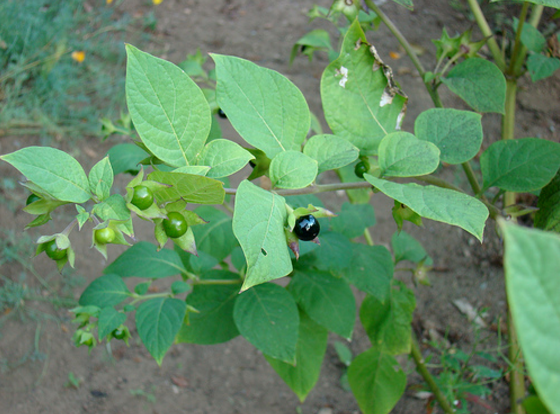
Belladonna alkaloids are a group of plant-based compounds that affect the central nervous system. They are produced by the plant Datum stra­monium, or Jimsonweed, and other closely related plants of the night­shade family. The name "Jimsonweed" comes from records of a famous poisoning that left the settlers of the Virginia colony of Jamestown deathly ill. Someone unfamiliar with the edible plants of the New World included the leaves of this plant in a salad, resulting in severe intoxication in the diners. The plant became known as Jamestown weed, which later was cor­rupted to Jimsonweed. Teas prepared from any part of the plant, or the chewed seeds alone, produce a bizarre dream state at extremely high doses. Most users do not remember the experience because the drug causes amnesia. Ingesting doses large enough to produce this mental state causes dangerous effects on heart rate, breathing, and body temperature.
The active agents in Jimsonweed are the belladonna alkaloids atropine and scopolamine. Atropine is responsible for many of the effects outside the brain. At low doses, this compound or similar drugs are used to treat asthma and some stomach problems, and also to diagnose eye problems. However, at higher doses atropine can be lethal. The dramatic effects on thought and perception are caused by the scopolamine. Scopolamine, unlike atropine, enters the brain easily and is responsible for all of the behavioral effects of this plant.

The belladonna alkaloids mimic the complete shutdown of the para­sympathetic nervous system—the mouth becomes dry, the pupils dilate, the heart speeds up, the bronchioles (breathing passages in the lungs) dilate, and digestion slows. These drugs also affect regions of the brain involved in the control of body temperature, which can rise to danger­ous levels. Finally, they block one receptor for the neurotransmitter ace­tylcholine that is important for memory, so users often don't remember the experience. These compounds and related ones also exist in other plants, including the deadly nightshade (Atropa belladonna) and the mandrake root (Mandragora officinarum). Used properly, they are important and effective medicines. They have also been used for divining and other religious purposes by many cultures. However, recent rec­reational use, mainly by teenagers who don't understand the drug's effects, has resulted in an increasing number of hospitalizations and occasional deaths. The mandrake root is showing up in herbal remedies and has caused accidental poisonings in this form.
Belladonna alkaloids have very different actions from the serotonin­related hallucinogens. They induce a bizarre delirium that users remem­ber only as strange dreams. These dreams often include the sensation of
These compounds have been used throughout history, as often for poi­soning as for hallucinations. The term belladonna, or "beautiful woman," comes from their use during the Middle Ages to dilate the pupils of the eyes for the enhancement of beauty. These drugs also were supposedly used by practitioners of female-deity worship in Europe and Eurasia during the rise of Christianity, when those using these drugs were depicted as "witches" by the early Church. These compounds were used in medicine at the time, and it is possible that famous stories of witches flying on broomsticks may derive from vaginal application of these drugs to treat gynecological disorders. Recent news that criminals in Colombia drug tourists with "burundunga," a plant-based drink containing sco­polamine that causes a dissociative state that the victims do not remem­ber, proves that the historic uses of these plants are still with us.

THE EFFECTS OF DRUGS CHANGE OVER TIME

15 Haziran
THE EFFECTS OF DRUGS CHANGE OVER TIME
DRUGS CHANGE

When people recall the first time they drank alcohol, most remember that they got drunker than they would now if they drank the same amount. This isn't all just fading memory. Many drugs cause much smaller reac­tions in the body when someone uses the same drug regularly. This change is called tolerance. Usually the lesser reaction is due to previous
experience with that drug or a similar drug, but even intense stress might change the reactions to some drugs.
Think about all the drugs we take that keep working even with many doses: our morning cup of coffee, an occasional aspirin for a headache (imagine how much aspirin we all take over a lifetime!), an antacid to calm the stomach after a spicy meal. Why do these drugs keep working? The reason is that we usually take them only for a short time, or intermit­tently. The more frequently we take the drug, and the higher the dose, the more likely it is that tolerance will develop. So, with just one aspirin once

a week or even once a day, the body has plenty of time between doses to return to normal. Caffeine continues to provide that pleasant arousing effect that peo­ple associate with their morning cup of coffee or tea for years. However, bodies do adapt to the daily cup of coffee (see the "Caffeine" chapter), so that people who are regular coffee drinkers have smaller effects from (show tolerance to) caffeine compared to someone who never ingests it. So, tolerance builds up, but the normal daily dose is not enough lo cause the effect to go away entirely.
Tolerance to some drugs can be dramatic. For example, heroin addicts rapidly build up tolerance to opiate drugs. Longtime heroin addicts will take doses that would have killed them the first time they used the drug. This tolerance can last as long as several weeks or months. Tolerance lasts this long because addicts typically take many doses a day, every day, some­times for years, and some of the body's changes are very long-lasting.
What about antibiotics? Everyone probably remembers being exhorted to be sure to take every one of the two weeks' worth of pills, and tried (and perhaps failed) to be careful to take a dose every six to eight hours. Although no one bacterium adapts to the drug, the population as a whole often does adapt. Bacteria replicate between one and many times a day, so new generations are constantly appearing. When an individual bacte­rium appears that happens to be resistant to the drug, this individual and its offspring survive, and the infection becomes resistant. With the rising use of antibiotics (antibiotics in beef-, antibiotics for many child­hood diseases, etc.), more and more humans are carrying resistant popu­lations of bacteria in their body that are difficult to treat with currently available antibiotics. This is drug tolerance playing out at the population level rather than the individual level, and it is becoming more of a prob‑
lem worldwide.
Some drugs actually become more effective over time. Cocaine is an example. Some of its effects become greater with each passing dose. 'Mere could be a beneficial side to this effect: drugs that gradually become more active could be delivered only occasionally and still be effective. This cer­tainly would be cheaper! Some researchers have proposed that antide­pressant drugs fit into this category, and that daily treatment may not be
necessary.
Fortunately, many of the drugs we rely on to treat disease are given in doses that do not cause the development of tolerance, so they can con­tinue working over a long period of time. This is especially important for drugs that are used to treat diseases like high blood pressure, which are lifelong conditions that require therapy for years.

HOW DRUGS MOVE THROUGH THE BODY

14 Haziran
HOW DRUGS MOVE THROUGH THE BODY
GETTING IN
HOW DRUGS MOVE

Drugs must get to their receptors to act. Even a skin cream like a corti­sone ointment that relieves the itch of poison ivy must be able to pass through the fatty membrane that surrounds most cells to heal the cells that are irritated by poison ivy toxin.
Most drugs must go much farther than the skin to act. Drugs used to treat tumors deep inside the body must travel from where they are placed, through the bloodstream, to be delivered to distant organs. A few drugs pass through cells so well that when they are rubbed on the skin they travel through all the skin layers down to the layer of the skin where the smallest blood vessels (capillaries) are, through the capillary walls, and into the bloodstream. Nicotine is one, which is why the nicotine skin patch works. There is also a motion-sickness drug that can travel through the skin to the brain. What is unique about such drugs is their ability to pass through a cell membrane that is very fatty However, most drugs just don't dissolve well enough in these fatty membranes to travel all that dis­tance. Such drugs prefer water to oil, and they have a great deal of trouble passing through cells: these often only enter the body well after injection.
Applying drugs to the mucous membranes is a more effective way to get some drugs into the body, because the mucous membrane surfaces of the body (as in the nose) are much thinner, and the capillaries are much closer to the surface. For these reasons, placing drugs in the nose, mouth, or rectum provides a pretty efficient route for administering some drugs. Cocaine and amphetamine enter the bloodstream easily from these sites, which is why people snort them. In contrast, antibiotics, an example of drugs that prefer water to oil, cannot cross through cell membranes and cannot be given nasally.
The most efficient way to get a drug into the bloodstream is to put it there directly. The invention of the hypodermic syringe provided the most direct means we have of getting drugs into the body: we inject them directly into a vein. The drug then goes to the heart and is distributed throughout the entire body. After intravenous injection, peak drug levels in the bloodstream occur within a minute or two. Then levels begin to fall as the drug crosses the capillaries and enters the tissues.

There are other places that drugs can be injected. Most immunizations are done by injecting the vaccine into the muscle (intramuscular). The drug is delivered a little more slowly this way, because it must leave the muscle and enter capillaries before it is distributed to the body. Drugs can also be injected beneath the skin (subcutaneously). This "skin-popping" is a route used by many beginning heroin users who have not yet started injecting heroin intravenously.
Inhaling drugs into the lungs can deliver a drug to the circulation almost as quickly as intravenous injection. Anyone who smokes tobacco takes advantage of this characteristic to deliver nicotine to the brain. The drug simply has to dissolve through the air sacs of the lungs and into the capillaries. The surface area of the lungs is very large and fat-soluble drugs like nicotine can move quickly across a large surface. In addition, the blood supply of the lungs goes directly to the heart and then out to the other tissues. Therefore, smoking can deliver the drugs to the tissues very quickly. However, only certain drugs enter the body efficiently this way. They must be very fat-soluble, and they must form a vapor or gas when they are heated. Several drugs, including cocaine and metham­phetamine, easily form vapors if they are in their uncharged form, which occurs when they are crystallized from an alkaline (basic) solution. In this case, the nitrogen that is present in each molecule is uncharged (it has no positive charge from a hydrogen ion). 'I hese qualities allow drugs to cross into the circulation very quickly. Drug users call this method of delivery "freebasing." Cigarette manufacturers create the same effect by making tobacco leaves alkaline (basic).
The most common way that people get drugs into their system is by swallowing them. Drugs that enter this way must pass through the walls of the stomach or intestine and then enter the capillaries. A large part of any drug that is swallowed never gets to the rest of the body because it is removed by the liver and destroyed. The liver is placed cleverly to do this job. All the blood vessels that take nutrients from the intestine to the body must go through the liver first, where toxic substances can be removed. This protects the body from toxic substances in food. Swal­lowing may be the easiest way to deliver drugs, but it is the slowest way to deliver a drug to the body That is why your headache is not gone five minutes after you take an ibuprofen tablet.
To recapitulate, the way people take a drug (the route of administra­tion) and the amount they take determine the drug's effects. Injecting drugs intravenously or smoking them results in nearly instantaneous effects because the levels of drug in the blood rise very rapidly. This speed accounts for the lure of injecting heroin intravenously or smoking crack. The drug effect occurs much more rapidly than if the drug was snorted. Injecting a drug intravenously or smoking it also offers the greatest risk of overdose. Drugs like heroin can be lethal because they take effect so quickly after intravenous injection that the drug user can reach fatal drug levels before it would be possible to get help. The same dose of drug taken orally will never exert as great an effect—some of it will be lost to metabolism because the process of absorption is gradual.
WHERE THEY GO
Once drugs are in the circulation, getting into most tissues is no chal­lenge. There are big holes in most capillaries, and drugs are free to go into most tissues. The brain is an important exception because it has an espe­cially tight defense—the blood-brain barrier--that prevents the move­ment of many drugs into it. All of the drugs we discuss in this book are psychoactive, in part because they easily pass through this blood-brain barrier.
Although there are myths that drugs "hide" in specific places in the body (such as Ecstasy or LSD hiding in the spinal cord for months), they don't really. Because most psychoactive drugs are fat-soluble enough to enter the brain, they also accumulate in body fat. TI-IC (the active com­ponent in marijuana) and PCP (phencyclidine, or angel dust) are partic­ularly prone to accumulate in fat. As the drug eventually leaves the fat, it enters the bloodstream again and can enter the brain but usually at lev­els so low it produces negligible effects.
There is a legal consequence to this storage in fat. Drugs like 'clic are so well stored in fat that they remain detectable in urine for weeks after the last time the drug was used. It is common in drug-treatment pro­grams for people who have been testing "clean" to show drugs in their urine suddenly if they have been losing weight during their rehabilitation. The drug is simply driven out of the fat as the fat deposits shrink.
GETTING OUT
Most drugs do not leave the body the way they came in. Although a few drugs, like the inhalants, enter and leave through the lungs, most leave through the kidneys and the intestine. Many are changed in the liver to a form that is easily excreted in the urine. This process of metabolism and excretion in the urine determines how long the drug effect lasts. It is very  difficult to change this rate, so once a dose of drug is ingested, there is no
hurrying the recovery. In extreme cases, there are emergency room pro‑
cedures that can accelerate the removal of some drugs by the kidneys, but otherwise we must wait.
Some drugs, like cocaine, leave the brain and bloodstream quickly. The combination of quick onset of action and rapid removal can lead to cycles of taking the drug repeatedly. Drug levels shoot up, then plummet, taking the user to an intense high followed by a "crash," which motivates him to take another dose of the drug. Some cocaine users get into "runs" of repeated doses and end up using grams of cocaine in a single sitting. This pattern often leads to overdosing—the user takes another dose as the drug effect wanes but before the earlier dose has been completely eliminated. Drug levels in the brain gradually accumulate to dangerous levels.
Marijuana presents the opposite problem. THC, the active compound, is extremely fat-soluble (and thus accumulates in body fat), and its break­down products are also active compounds. So, as the body tries to remove it, the metabolic products continue to have psychological effects. These
two characteristics of marijuana mean that users can be under its influ­ence for many hours or even days after it is smoked.